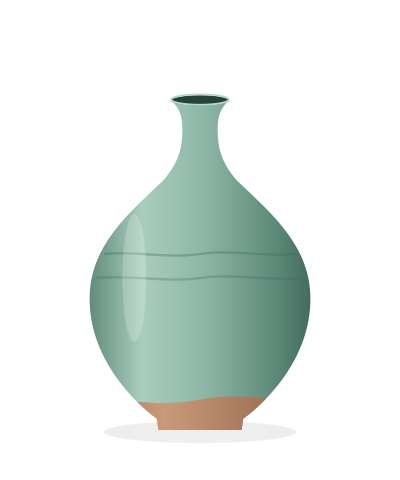
Celadon
Glassy, jade-green and pooling darker in every carved line. Subtle, and endlessly calm.
Away from the screen, I’m a potter. I throw on the wheel, glaze, and fire kilns, and I’m happiest with clay up to my elbows. It’s a craft built on feel, chemistry and timing, and I know it inside and out.
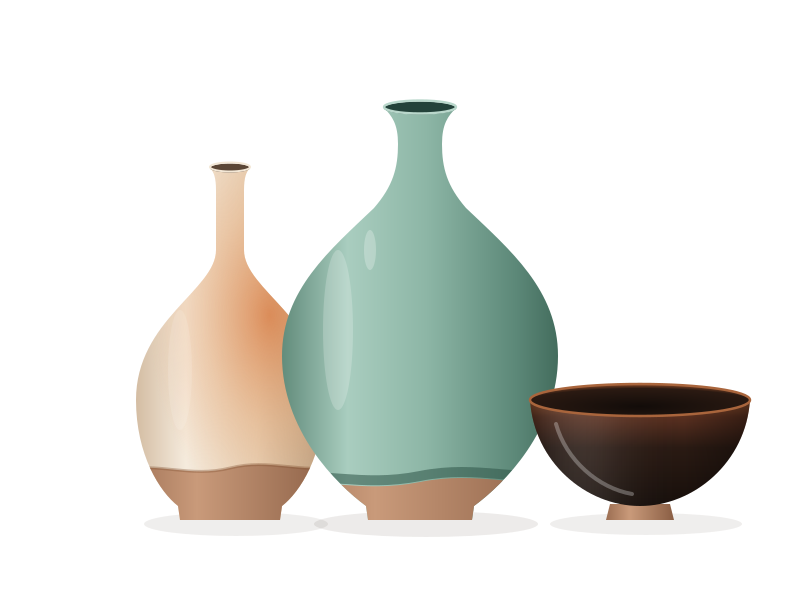
At the wheel
Centering, opening and pulling walls to shape cylinders, bowls, bottles and vases with even, intentional forms.
Trimming feet at leather-hard, refining profiles, and adding the details that make a piece feel right in the hand.
Dipping, pouring and layering glazes, with test tiles to dial in color, texture and how a glaze breaks over an edge.
Inside the kiln
Firing is the part most potters find mysterious, and it’s the part I know best. A good firing is careful planning, close watching and knowing exactly when to leave things alone.
Glazes I love
Four classic glaze families, each with its own personality, and each a lesson in how chemistry and heat work together.
Glassy, jade-green and pooling darker in every carved line. Subtle, and endlessly calm.
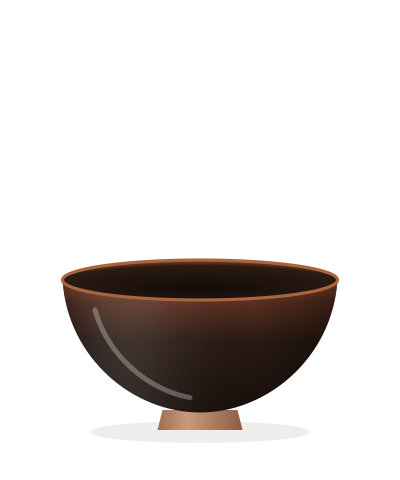
Deep iron black that breaks to rust where it thins. Dramatic and earthy.
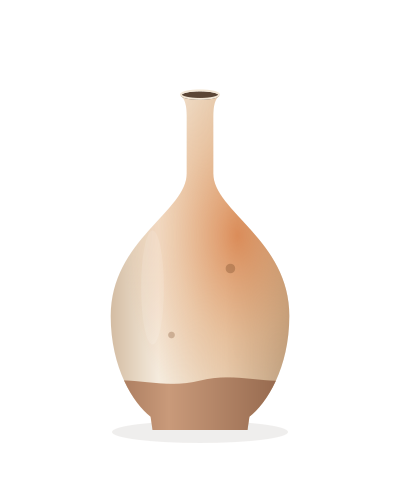
Creamy white with flashes of fire orange. Every piece comes out of the kiln different.
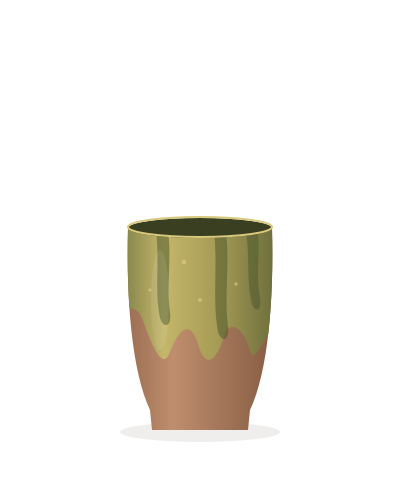
Runny, mottled green-gold that records the flow of heat and flame across the surface.
Clay & code
If the clay isn’t centered, nothing you build on it will hold. Same with systems: get the foundations right before adding anything clever.
You can’t rush a firing or open the kiln early. Good automations and good websites need testing time too.
Test tiles and firing logs are how potters get repeatable results. Documentation does the same job in technology.
Talk shop
I’m always happy to talk clay, glazes and firing, or to help you work out what went wrong in your last kiln load.